Habit Tracker Generator
Create a personalized habit tracking calendar to build consistency and achieve your goals.
Simply choose your month, add your habits, and get a printable tracker you can use daily.
See What You Can Create
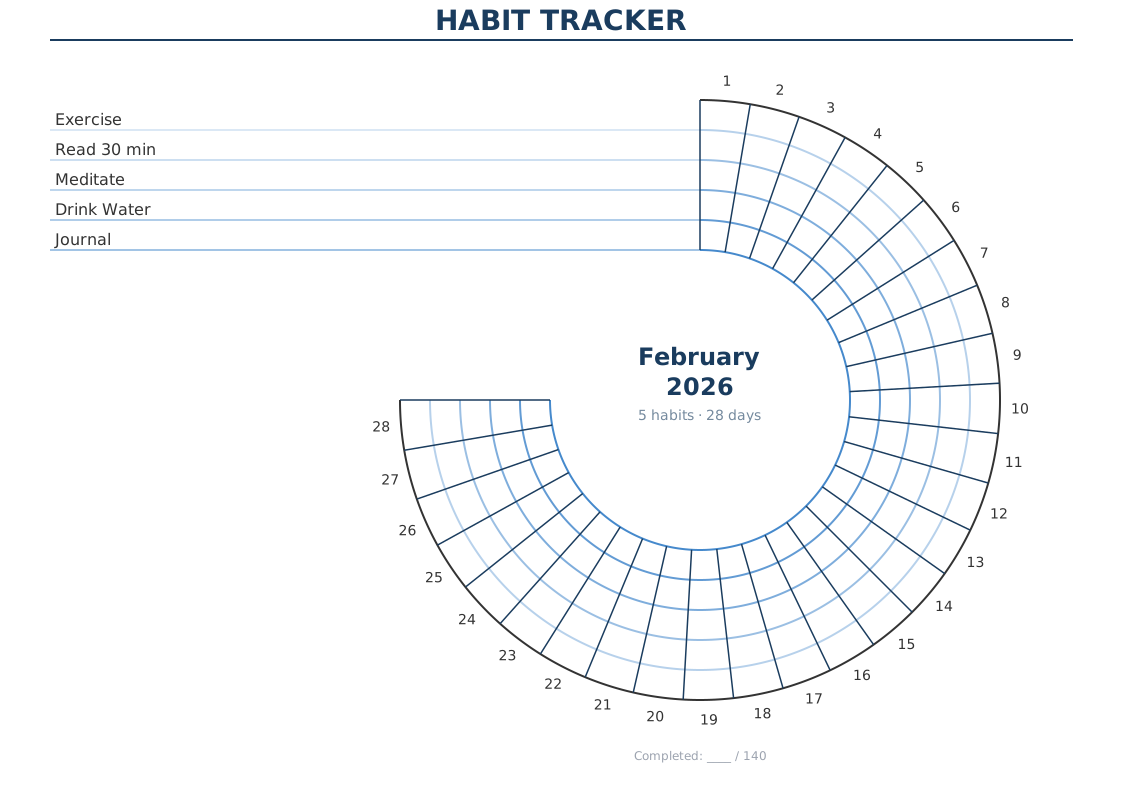
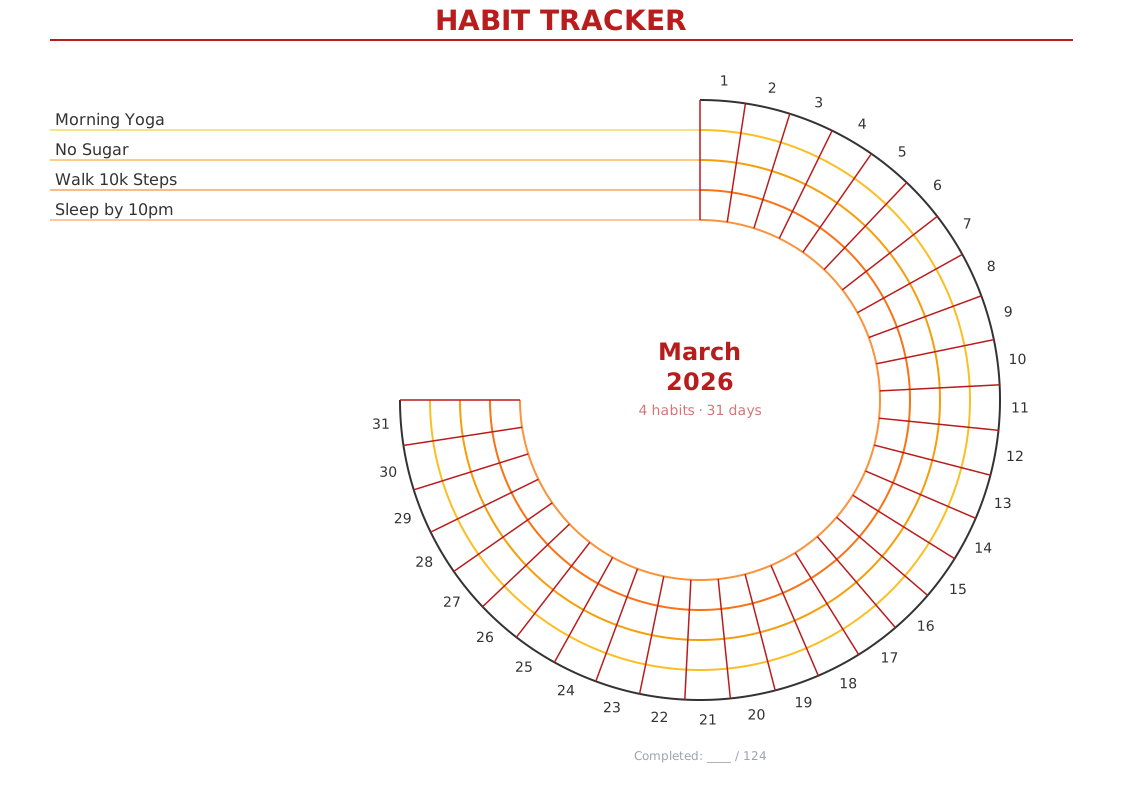
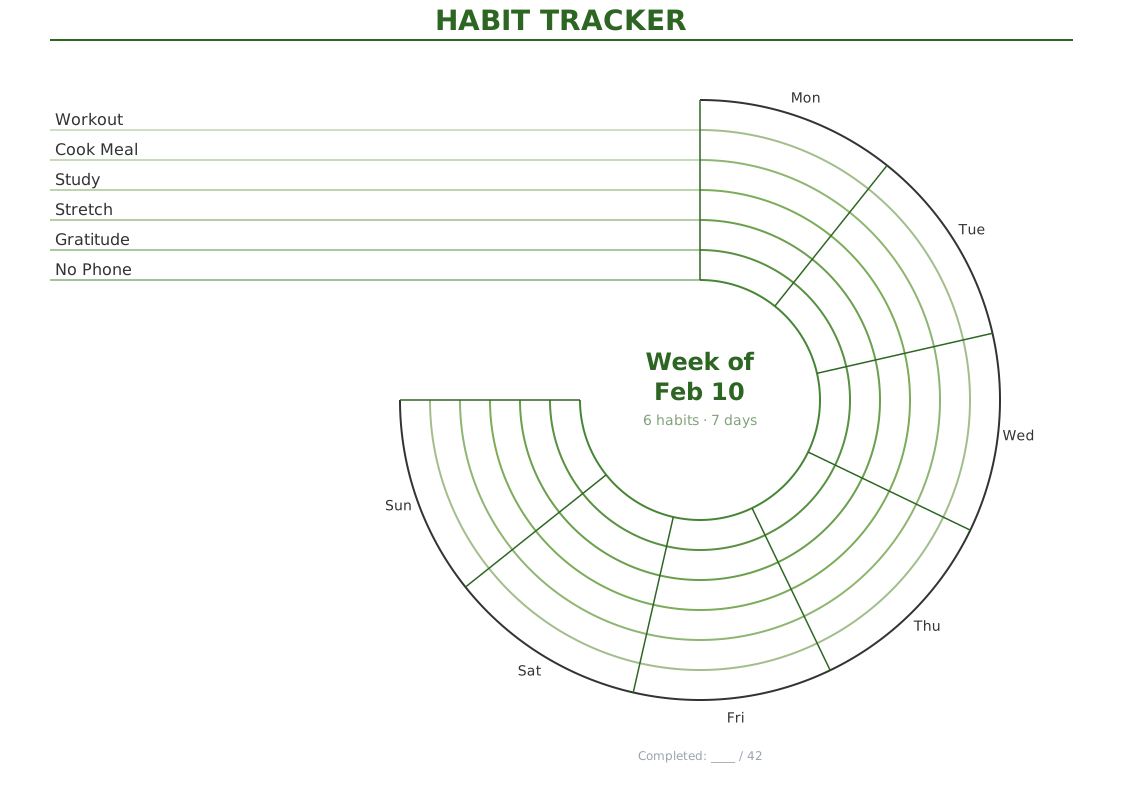
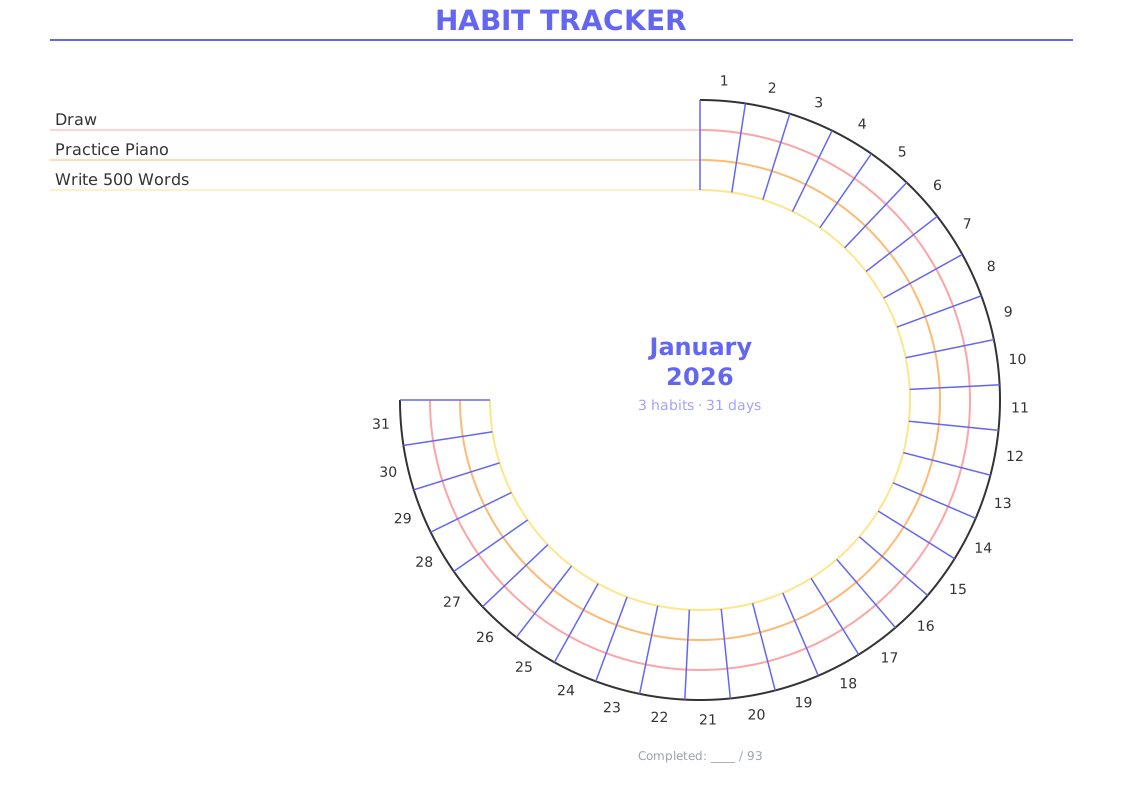
Beautiful circular trackers for any habit or goal
Press ? for keyboard shortcuts
How It Works
Choose Your Month
Select any month and year. The day count adjusts automatically so your tracker always matches the calendar.
Add Your Habits
Type up to 10 habits you want to build, or pick from our curated presets for health, productivity, or self-care.
Print & Track Daily
Download as SVG or PNG, or print directly. Mark off each day to build streaks and see your progress at a glance.
Why Visual Habit Tracking Works
Research from University College London found that forming a new habit takes an average of 66 days, not the commonly cited 21. The key factor in whether a habit sticks is not willpower but consistent daily repetition paired with visual feedback. A circular habit tracker gives you that feedback at a glance: each filled segment represents a day of follow-through, and the growing pattern creates a motivational loop that reinforces the behavior.
Harvard Business School professor Teresa Amabile's research on the "progress principle" shows that tracking small daily wins is the single most effective way to boost long-term motivation. When you physically mark a habit as complete, your brain registers a micro-accomplishment and releases dopamine, strengthening the neural pathway associated with that behavior. Over weeks, this compounds into automatic routines that require less conscious effort to maintain.
Printed trackers work especially well because they stay visible in your environment. Behavioral scientists call this "environmental cuing": when a tracker is pinned to your wall or refrigerator, it acts as both a reminder and an accountability tool. Unlike phone apps that disappear behind a lock screen, a physical tracker is always in your line of sight, keeping your goals front and center throughout the day.
Sources: Lally et al., "How are habits formed" (European Journal of Social Psychology, 2010); Amabile & Kramer, "The Progress Principle" (Harvard Business Review, 2011).From Our Blog
Dive deeper into the science and strategies behind building lasting habits.
The 21-Day Habit Myth: What Science Really Says
Debunking the popular 21-day rule with real scientific research. Learn how long it actually takes to form new habits and why individual differences matter.
8 min readThe Complete Guide to Habit Stacking
Master habit stacking to build multiple positive habits without overwhelming yourself. Proven strategies with practical morning, work, and evening examples.
12 min readWhy Habit Tracking Works When Motivation Fails
Explore the psychology behind habit tracking and why visual progress beats willpower for building lasting behavioral change.
7 min read